Alibaba's Qwen3.8-Max Challenges US AI Dominance in August 2026
Alibaba released its largest model yet on August 3 2026, featuring 2.4 trillion parameters and a context window up to 1 million tokens. The model is priced
Summary
- Alibaba released its largest model yet on August 3 2026, featuring 2.4 trillion parameters and a context window up to 1 million tokens.
- The model is priced at $2 per million input tokens and $6 per million output tokens, with weights slated for open release the following week.
- This launch coincides with ongoing US export restrictions on advanced AI chips, highlighting China's push to close the gap with American leaders.
Alibaba dropped an AI model with 2.4 trillion parameters on August 3 2026. That one number lands it among the biggest models people are openly discussing right now. Chinese labs keep pushing scale hard, even while Nvidia and AMD hardware stays tough to access.
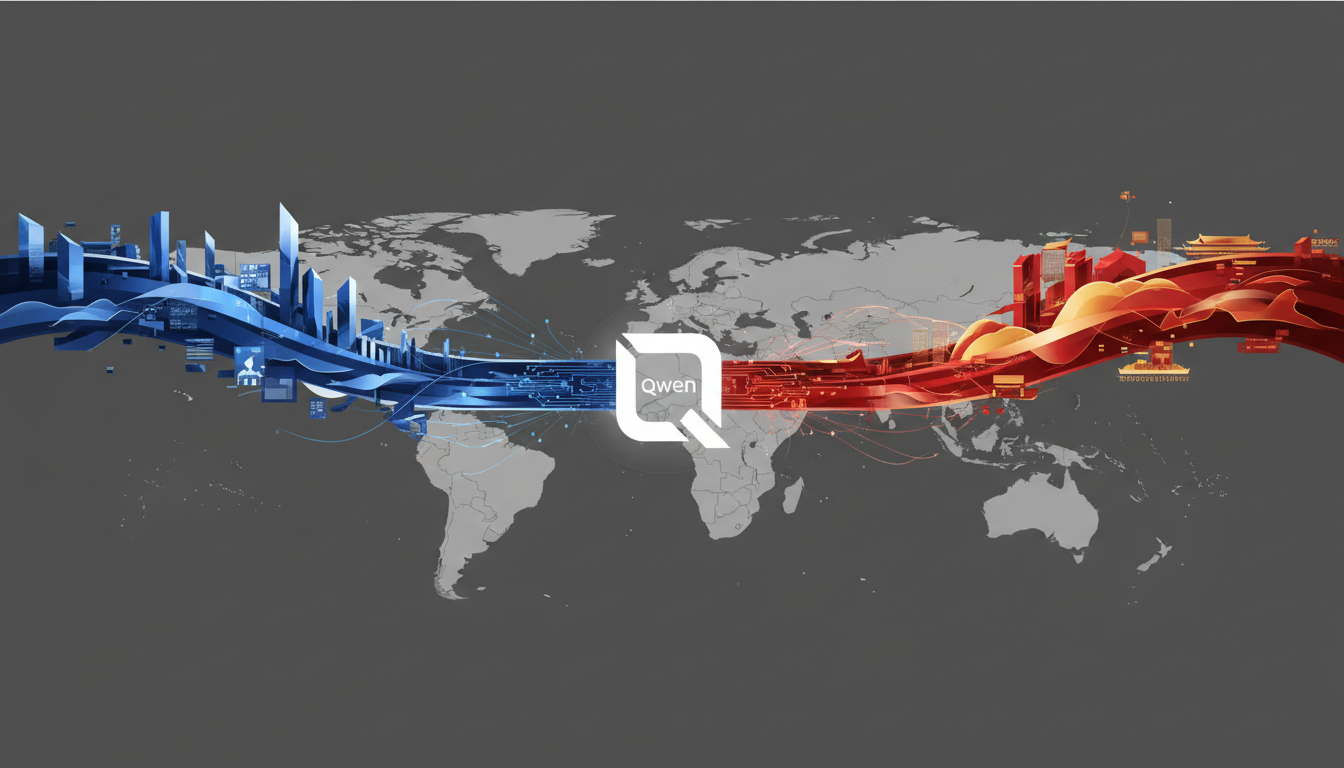
Alibaba's Qwen3.8-Max release shows China's AI work accelerating fast enough to rival top US models, even with hardware curbs tightening. The timing hits right after another round of US export rules, yet the milestones still land on schedule. And honestly, that's a big deal.
Technical Specifications and Open Release Plans
The model handles up to 1 million tokens of context. That lets it swallow whole books or massive codebases in one go, which matters for enterprise jobs like legal review or long code audits. Company statements confirm the full weights for Qwen3.8-Max and the smaller Qwen3.8-27B version will drop the week after launch.
Pricing lands at $2 per million input tokens and $6 per million output tokens. Those rates undercut many US options and could pull in cost-conscious developers across Asia and emerging markets fast. Nikkei Asia reports the launch broadens Alibaba's enterprise lineup while squaring it off directly against OpenAI and Anthropic.
The open-weights choice stands out when so many frontier models stay closed. Releasing the full set opens the door to community fine-tuning and on-prem runs, which can sidestep some cloud limits tied to hardware access.
Market Context and AI Crypto Connections
AI news keeps pulling crypto tokens into the conversation. Mid-2026 updates flag FET, RNDR, TAO, and NEAR as plays tied to compute and data layers. TAO holds the biggest premium among AI-native assets by price per token, RENDER carries the heavy compute story, and NEAR keeps solid layer-1 liquidity.
These tokens move when real model launches create fresh narrative lift. A 2.4-trillion-parameter release from a major Chinese cloud player strengthens the case that demand for decentralized compute and data markets could keep rising. CoinMarketCap coverage of the Artificial Superintelligence Alliance points to recent deals showing FET-linked tools in actual use, even as model sizes climb.
Hardware controls slow some training runs, but they have not stopped AI workloads from expanding overall. Projects offering workarounds for compute or data pick up attention every time a big new model appears.
Performance Shortfall and Remaining Gaps
Nikkei Asia coverage notes Qwen3.8-Max falls short of some launch claims. The piece questions the idea that it sits second only to certain leading systems and flags benchmark gaps in a few areas. That takes some wind out of the parity narrative with the strongest US models.
The shortfall does not wipe out the scale or pricing edges. Raw parameter count and context length still only tell part of the story, though. Inference speed, safety work, and domain-specific results need more checking. People will watch the open release to see if community tests back the early numbers or expose more weaknesses.
Synthesis
The picture adds up to steady Chinese progress at the frontier despite hardware limits. Extreme scale, open weights, and sharp pricing apply real pressure right away. Independent checks on performance will decide how fast enterprises move to the model or stick with US options they already trust.
The race no longer hinges only on who trains the single biggest model first. Access, cost, and openness now weigh as much as raw power.
What remains to be seen is whether open releases at this scale will speed global innovation more than export controls can slow it, or whether performance gaps will keep the edge with closed US systems for a while yet.