Blockchain Bridges Fueling Mobile Play-to-Earn Growth
Mobile gaming revenue is projected to nearly double by 2030 while play-to-earn and NFT gaming segments expand at more than double that pace.
Summary
- Mobile gaming revenue is projected to nearly double by 2030 while play-to-earn and NFT gaming segments expand at more than double that pace.
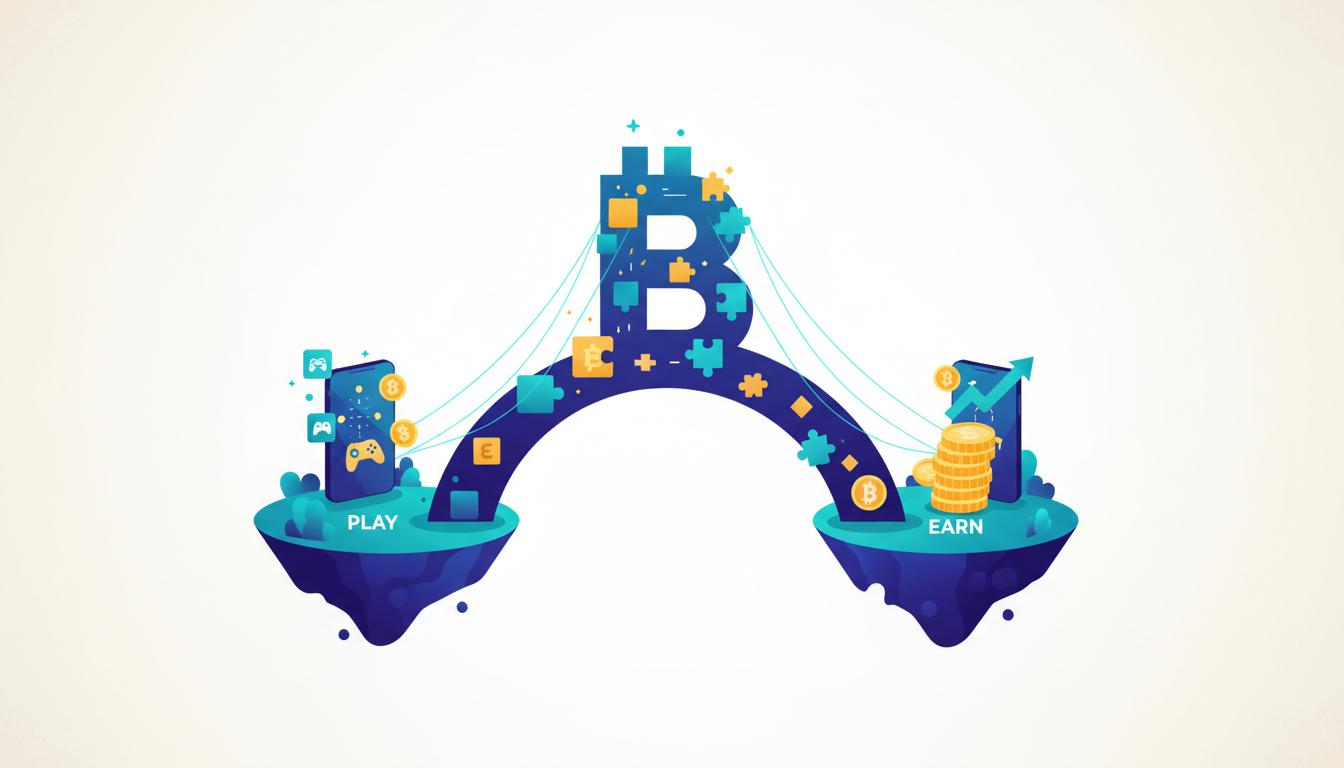
- Interoperability tools and blockchain bridges are reducing friction for players moving assets across chains in titles such as Sunflower Land and Legends of Elumia.
- July 2026 marks a point where maturing chain abstraction coincides with 19.2 percent CAGR expectations through 2034 for the broader crypto gaming market.
The mobile gaming market hit USD 139.38 billion in 2024. Projections put it at USD 256.19 billion by 2030, growing at a 10.2 percent CAGR according to Grand View Research. That baseline already shows strong demand for phone-friendly play. Layer on the Play-to-Earn NFT Games Market, which stood at USD 1.98 billion in 2026 and should reach USD 13.98 billion by 2035 at 21.3 percent CAGR per Business Research Insights, and the picture sharpens fast. Play-to-earn mechanics and NFT gaming are outpacing the wider mobile sector.
Interoperability solutions and blockchain bridges accelerate adoption in play-to-earn gaming right now. July 2026 highlights this shift as chain abstraction matures and cuts the friction that once pinned players to single networks. The result is faster movement of assets between Ethereum, Bitcoin, Solana, Ronin, and other chains that host popular blockchain games.
Market Growth Data in Context
Numbers alone do not explain adoption. Yet they frame why bridges matter now. The mobile gaming base of USD 139.38 billion in 2024 is expected to grow steadily at 10.2 percent annually. That trajectory already favors games that run smoothly on phones. When the play-to-earn and NFT gaming slice grows at 21.3 percent, the gap between general mobile gaming and blockchain-enabled variants becomes visible.
This means developers who solve cross-chain movement gain an edge. Players can earn tokens or NFTs on one network and bring them into another title without lengthy withdrawals or centralized exchanges. The 19.2 percent CAGR projected for crypto gaming through 2034 reinforces the same point. Growth is not uniform across chains, so tools that connect them become infrastructure rather than optional features.
- Sunflower Land appears on both Ethereum and Bitcoin networks, allowing players to choose the chain that suits their wallet or fee tolerance.
- Apeiron runs on Ronin and emphasizes real-time combat with planet NFTs.
- Legends of Elumia operates primarily on Solana for fast, low-cost asset transfers while maintaining true ownership of characters, pets, and items.
These examples illustrate how different chains serve different gameplay strengths. Without bridges, players remain siloed. With them, the same account can participate across titles listed on PlayToEarn.
How Bridges and Interoperability Work in Practice
Blockchain bridges handle the technical transfer of value and data between networks. In mobile crypto gaming, that translates to quicker onboarding. A player who starts on Ethereum can move earned NFTs into a Solana-based session without leaving the mobile app for long. Chain abstraction layers hide the underlying steps, so users see only the game.
Legends of Elumia, described as a web3 MMORPG where players have true ownership of all characters, pets, and items, benefits directly from these connections. The title leverages Solana for speed while remaining discoverable alongside Ethereum titles on aggregator sites. PlayToEarn lists such games precisely because users want one place to find blockchain games that pay cryptocurrency and NFTs.
Apeiron shows a similar pattern on Ronin. Players hatch planet NFTs and lead apostles through combat. Ronin was built for gaming throughput, yet bridge connections allow assets earned there to reach other ecosystems. The practical effect is wider liquidity for NFTs and tokens, which supports the higher growth rate recorded for the play-to-earn segment.
"PlayToEarn is the best source to find Play-To-Earn Crypto & NFT Blockchain Games. Earn Cryptocurrency & NFTs playing Ethereum & Bitcoin Games ... Sunflower Land ..."
, playtoearn.com (PlayToEarn)
The quote captures the discovery layer that bridges support. When players can locate and move between games easily, retention improves.
Persistent Complexity Remains a Brake
Interoperability across chains remains complex and may slow mass adoption without further standardization. Different consensus rules, token standards, and security models still require specialized code for each bridge. A failure on one side of the bridge can strand assets or expose users to exploits even when the game itself runs without issue.
Developers must therefore weigh speed against security. Mobile crypto gaming users expect simple tap-to-play flows. When bridge transactions fail or require manual confirmation on multiple chains, the experience breaks. This friction is the clearest counterweight to the growth numbers cited earlier.
Key Insight: Bridge Trade-offs
While bridges expand reach, each additional chain connection introduces audit requirements and potential points of failure that teams must manage continuously.
Source: Ethereum
By contrast, single-chain games avoid these layers. The trade-off is narrower audiences and slower liquidity formation for the NFTs they issue.
Synthesis of Evidence
The data show two parallel trends. Mobile gaming expands at a measured 10.2 percent CAGR while play-to-earn and NFT gaming accelerate at roughly twice that rate. Specific titles already operate across multiple chains, and aggregators like PlayToEarn make them discoverable. Bridges supply the connective tissue, yet the same infrastructure carries added operational overhead. The net effect in July 2026 is continued expansion tempered by the need for more robust standards.
And honestly, that's a big deal for anyone watching this space. Adoption will likely concentrate first among players already comfortable with wallets and multiple networks. Wider mobile audiences may wait for further abstraction that removes remaining steps.
The open question worth watching is whether improved bridge security and standardization can close the gap between crypto-native users and mainstream mobile gamers before the next market cycle peaks. Which, if you've been watching this space, shouldn't be surprising.