Crypto Under Fire: DeFi Hacks and China’s Sanctions Defiance Impact Policy
China's unprecedented defiance of US sanctions escalates geopolitical tensions, pushing for stricter crypto regulations in early 2026. A major DeFi hack on
Summary
- China's unprecedented defiance of US sanctions escalates geopolitical tensions, pushing for stricter crypto regulations in early 2026.
- A major DeFi hack on Saturday, exploiting a cross-chain bridge, intensifies concerns over security risks in decentralized finance.
- Solutions like the Canton Network offer institutional guardrails, but balancing innovation and oversight remains a regulatory challenge.
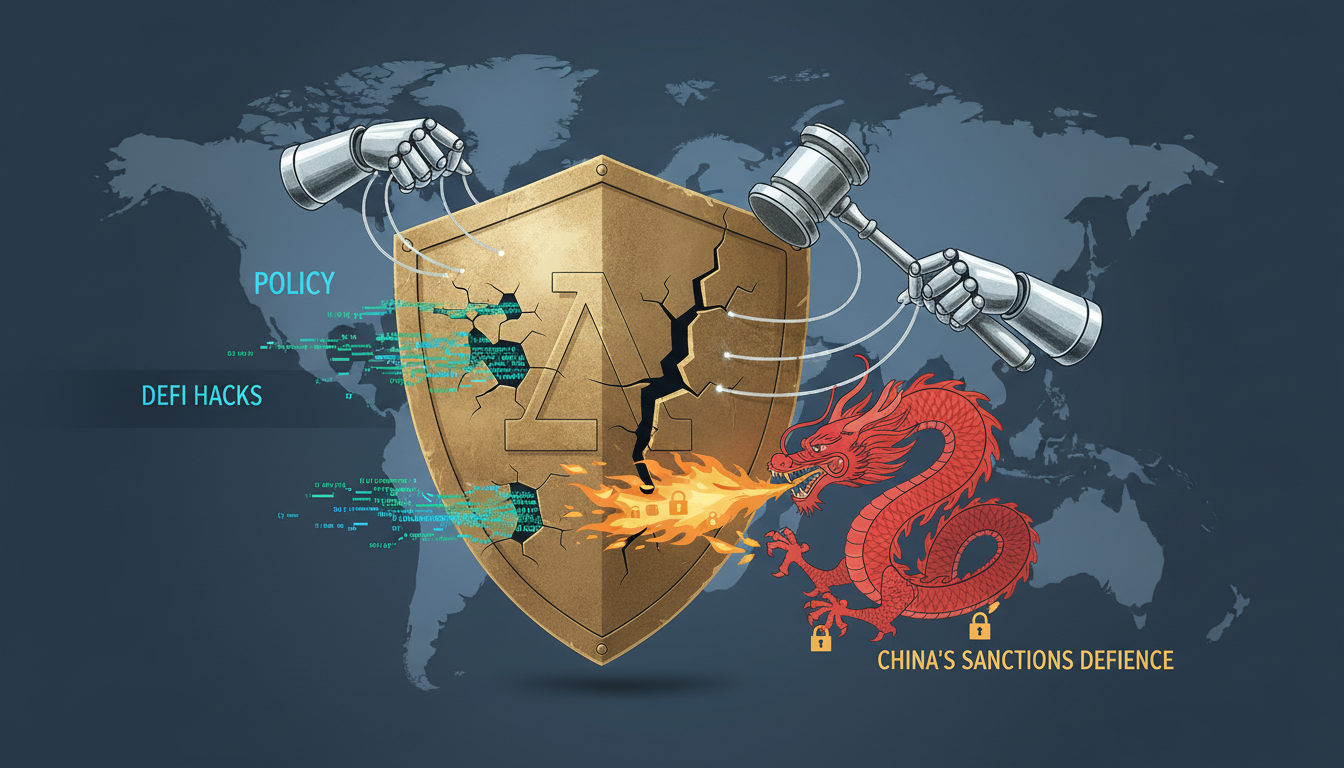
China ordered its companies to ignore US sanctions in a dramatic escalation of geopolitical tensions. Bloomberg reported this bold move on May 4, 2026, and it threatens to pull China's vast banking sector into conflict with the world's largest economy. The defiance focuses on the Iran petrochemical sector, as Crypto Briefing pointed out, and it hit the cryptocurrency world during a major DeFi hack on Saturday that drained funds through a cross-chain bridge exploit.
These dual crises in early 2026 are alarming regulators everywhere.
"China has ordered its companies to ignore US sanctions, an unprecedented act of defiance that threatens to trap a vast banking sector in the crossfire as tension rises between the world’s largest economies."
, Bloomberg (Source)
Context: Why Crypto Regulation is Under the Spotlight
The crypto industry has operated in a regulatory gray area where innovation often outpaces oversight. China's defiance of US sanctions adds a geopolitical twist and raises questions about cryptocurrencies evading traditional controls. This complicates multinational compliance and dims US-Iran diplomacy prospects, so the digital asset space needs clear rules now.
Saturday's hack exploited a cross-chain bridge, as a YouTube report detailed, and it highlights the fragility of decentralized systems.
Geopolitical risks and technical flaws are colliding, so regulators feel intense pressure to act fast.
Details: Unpacking the Crises Driving Regulatory Urgency
China's directive to ignore US sanctions marks a historic standoff, as Bloomberg highlighted. It heightens US-China tensions and challenges global financial systems, especially with cryptocurrencies potentially aiding sanction evasion. China's banking sector involvement makes regulators focus on how digital assets tie into international policy.
The DeFi hack on Saturday revealed a critical weakness in cross-chain bridges, a vital link between blockchain networks.
Attackers drained significant funds in this incident, though exact figures are undisclosed, and it underscores ongoing security risks as DeFi adoption grows.
Digital Asset CEO Yuval Rooz says platforms like the Canton Network can mitigate risks by letting institutions add guardrails against bad actors, as Decrypt reported. These innovations look promising, but they also show the challenge of boosting security without stifling crypto's decentralized spirit.
Such tools highlight the need to scale protections carefully in a fast-evolving sector.
Reaction: Industry and Community Pushback
The crypto community is split on what's next. Many see the need for regulation to tackle geopolitical misuse and DeFi flaws, but they worry overregulation will stifle innovation.
Platforms like Ripple and decentralized networks show blockchain's rapid development, and that could suffer if policymakers prioritize control over flexibility.
Industry experts argue solutions like the Canton Network prove the sector can self-regulate and avoid tough laws. China's sanctions defiance and ongoing hacks are dominating headlines, though, so governments might step in before the industry fixes itself.
The debate over oversight versus innovation is heating up in early 2026.
Regulators in the US and elsewhere will likely ramp up scrutiny of digital assets due to China's actions, and DeFi's latest exploit may speed up demands for security standards. Stakeholders should keep an eye on new policy proposals and global efforts, as the balance between protecting finances and promoting blockchain hangs in the balance.