Crypto VC Funding Plummets in April 2026 Amid North Korea Hack Fallout
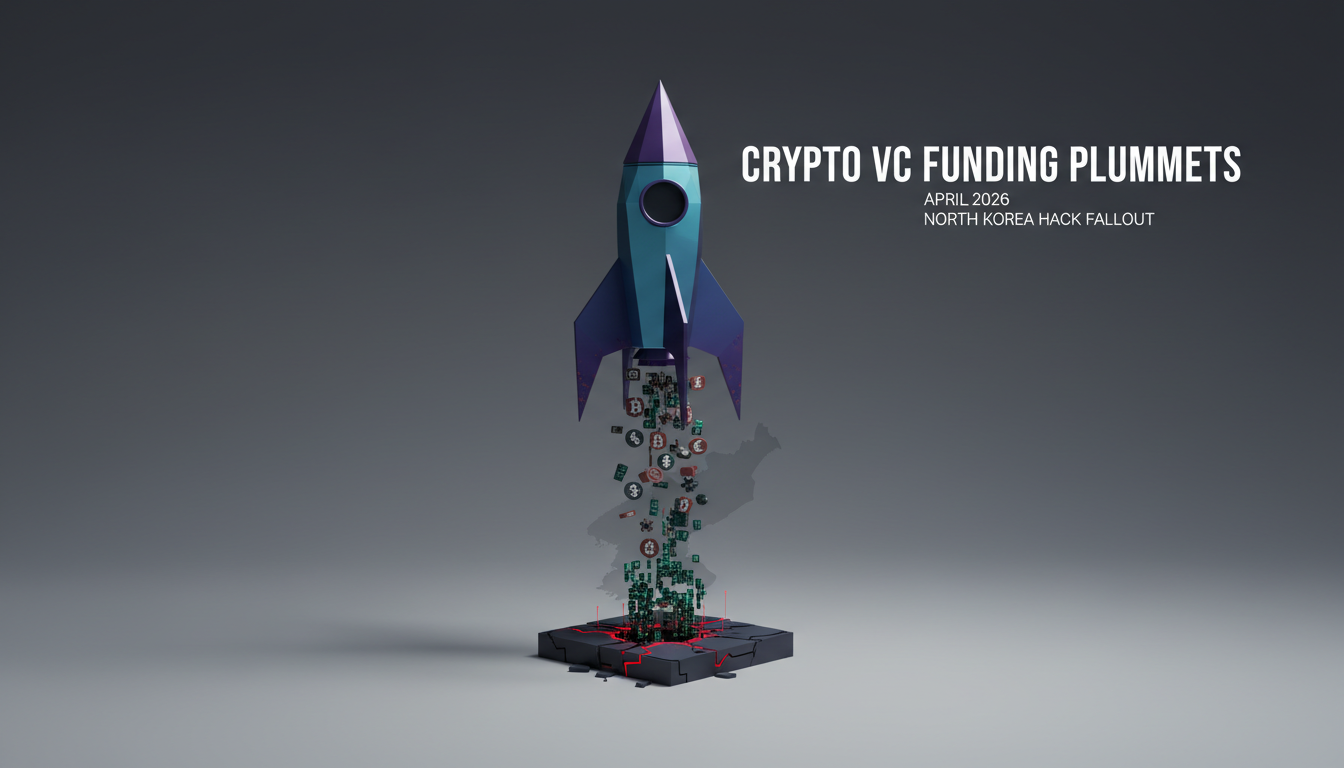
Crypto VC funding dropped to $659 million in April 2026, the lowest since July 2024, signaling waning investor confidence. North Korea-linked hacks stole
Summary
- Crypto VC funding dropped to $659 million in April 2026, the lowest since July 2024, signaling waning investor confidence.
- North Korea-linked hacks stole $577 million in 2026, accounting for 76% of all crypto losses through April.
- Aave’s $71 million legal battle over seized funds tied to North Korea could reshape DeFi ownership laws.
Crypto venture capital funding dropped to just $659 million in April 2026, the lowest monthly total since July 2024. This sharp decline follows a strong Q1 performance of $9.26 billion across 280 deals. It shows a quick change in investor sentiment.
The drop lines up with rising tensions and breaches, especially North Korea's hacks.
The crypto industry rode a wave of optimism with $9.26 billion in VC funding during Q1 2026. That figure suggested blockchain and DeFi innovations were gaining traction among investors. But April's 75% drop to $659 million tells a different story.
It reflects eroding trust in a sector built on innovation and risk.
North Korea's alleged role in cybercrimes, including $577 million stolen from Drift Protocol and Kelp DAO, shook the market. Legal issues, like Aave's U.S. court battle, are making the industry face questions about asset ownership and global accountability in DeFi.
"North Korea stole USD 577M in just two crypto hacks in 2026 , Drift Protocol and KelpDAO , accounting for 76% of all hack losses through April."
, TRM Labs (Source)
Context: A Perfect Storm for Crypto
The $659 million in VC funding for April 2026 signals a market that's growing more selective. Investors seem spooked by the huge losses from hacks, with North Korea responsible for 76% of stolen crypto funds this year. That adds up to $577 million from just two attacks.
On top of that, legal uncertainties like Aave's court fight are forcing tough questions.
Aave argues the funds belong to users, not the protocol. A ruling could set a precedent for DeFi ownership and recovery rules. The terrorism creditors' move to seize Arbitrum-frozen Kelp DAO ETH raises the stakes for DeFi governance even more.
Details: Breaking Down the Numbers and Challenges
The $659 million in VC funding for April 2026, down from a Q1 peak, shows a market that's becoming pickier. Investors appear rattled by the scale of losses from hacks, with North Korea alone grabbing 76% of stolen crypto funds. That totals $577 million across two attacks.
Aave is in a high-stakes legal fight to stop a $71 million crypto seizure in a U.S. court. It's tied to North Korea claims, as reports from CoinDesk and Coinpedia note. The complication of North Korea terrorism creditors targeting Arbitrum-frozen Kelp DAO ETH makes DeFi governance even riskier.
Some parts of these stories are still unfolding. Specific dates for the hacks and rulings are unclear, and North Korea's involvement hasn't been fully confirmed. Attribution and timelines matter as more details come out.
That means we'll need to watch how this evolves.
Reaction: Market Jitters and Community Concerns
The crypto community's reaction to April's funding dip and the North Korea hacks has been fast and tense. Social media like X is full of talk about the $659 million low, with posts from BitcoinKE and others warning of a cautious VC scene. Many worry that ongoing breaches could scare off investment in DeFi projects.
Aave's legal battle has triggered debates about decentralized platforms.
If courts rule against user ownership, trust in DeFi might suffer. Users and developers will have to deal with the risks of government intervention and asset freezes.
Social Highlight · @BitcoinKE · Unknown
Crypto VC funding dropped by 75% to $659 million in April 2026, the lowest monthly total since July 2024. (link)
Keep an eye on May 2026 data to see if VC funding bounces back or keeps falling. The result of Aave's $71 million case in U.S. court could set new legal standards for DeFi. The industry has to fix security weaknesses that groups like North Korea exploit, or it might face more investor doubts and tougher rules.
That could change everything going forward.