Ethereum Bridges: Powering the Cross-Chain Future in 2026
Ethereum Bridges: Powering the Cross-Chain Future in 2026 Summary Ethereum bridges are vital for cross-chain interoperability, linking over 160 blockchain
Summary
- Ethereum bridges are vital for cross-chain interoperability, linking over 160 blockchain ecosystems in 2026.
- Layer 2 scaling solutions, backed by responsive pricing models, aim to manage Ethereum's congestion and fee volatility.
- The multi-chain economy of Web3 relies on these technologies to drive seamless asset transfers and scalability.
Can you believe that in 2026, Ethereum bridges connect over 160 distinct blockchain ecosystems, making asset transfers across a fragmented Web3 world feel almost effortless? This jaw-dropping stat, straight from Phemex News, highlights just how fast blockchain networks are multiplying—and why we desperately need ways to link them. With DeFi, NFTs, and blockchain gaming booming, users and developers are hungry for smooth, affordable ways to shift value and data between chains.
That’s where Ethereum bridges and Layer 2 (L2) scaling solutions come in—they’re the key to cross-chain interoperability and tackling scalability issues, fueling the multi-chain economy of Web3 in 2026. Since Ethereum remains the beating heart of decentralized innovation, its ability to scale and play nice with other networks will shape blockchain’s future. Let’s explore how bridges and smart pricing models are paving the way, why they’re crucial right now, and what risks we can’t ignore.
The Rise of Ethereum Bridges: Enabling Cross-Chain Interoperability
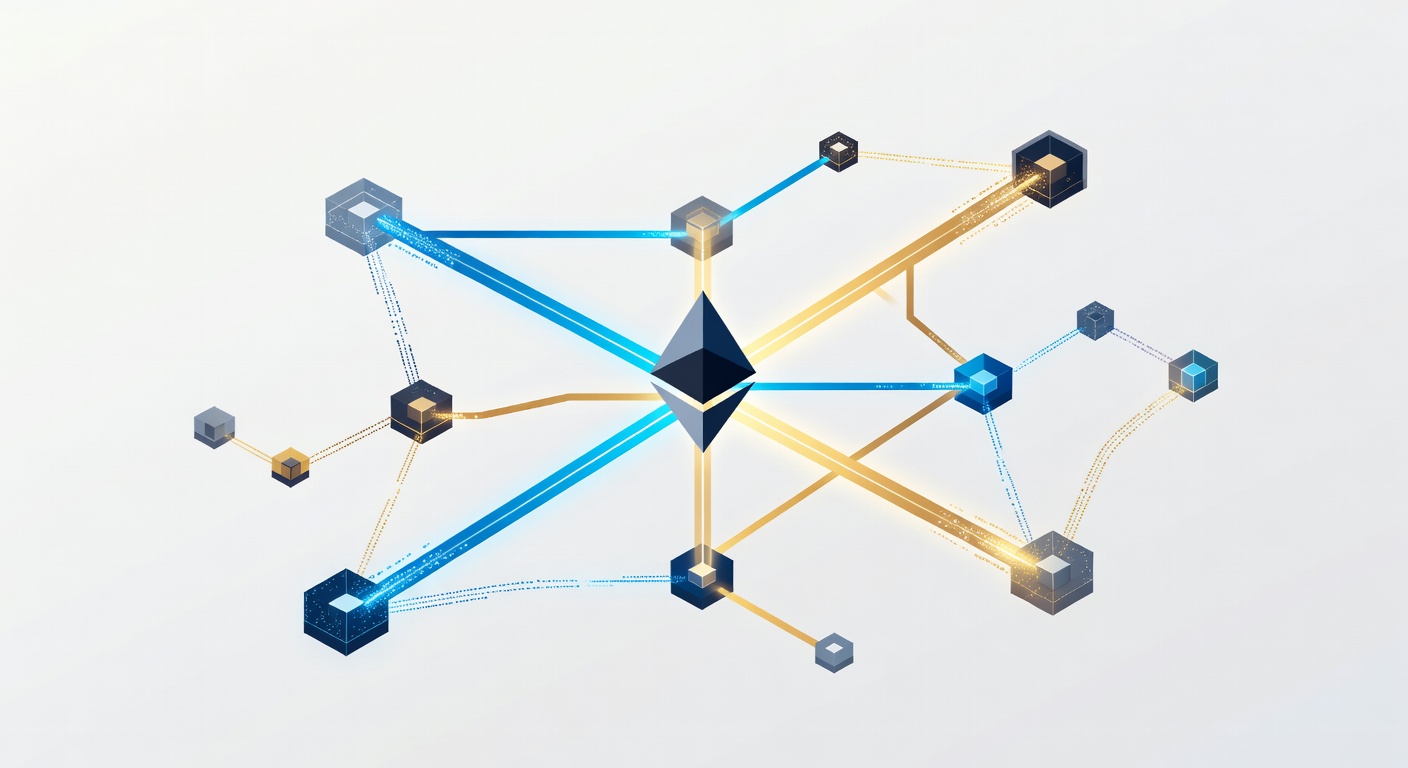
Ethereum bridges are the unsung heroes of the multi-chain economy in 2026, tying together diverse blockchain networks and letting tokenized assets zip around without a hitch. Phemex News reports that integrations like LayerZero and Canton Network now link over 165 chains. That’s not just a tech win—it’s a massive boost for industries like finance, where tokenized assets must cross ecosystems without losing value or security.
Standout protocols like Wormhole and Stargate shine in this busy field, delivering quick and budget-friendly cross-chain swaps. eco.com breaks down their speed, fees, and supported chains, showing why they’re essential for anyone navigating Web3. Picture this: a DeFi user swaps tokens from Ethereum to Solana in mere seconds, or a gamer moves NFTs across chains without breaking a sweat—that’s the world bridges are crafting.
And honestly, that’s a big deal.
It’s not enough to just connect chains; you’ve got to do it smoothly. Quicknode ranks the top 10 cross-chain bridges of 2026, spotlighting how they cut friction for developers and users. The takeaway? As blockchain ecosystems keep expanding, bridges are the vital threads stitching the multi-chain economy together.
"Ethereum bridges are not just technical infrastructure; they’re the highways of the multi-chain economy, enabling over 160 ecosystems to interact seamlessly."
— Phemex News (Phemex)
Layer 2 Scaling: Responsive Pricing as the Key to Billions of Users
While bridges handle interoperability, Ethereum’s Layer 2 solutions tackle another huge hurdle: scalability. The folks at Offchain Labs, creators of Arbitrum, keep stressing the need for responsive pricing models to tame fee volatility when the network gets slammed. Edward Felten, co-founder of Offchain Labs, made this crystal clear at EthCC 2026, arguing that L2 networks must tweak pricing on the fly to scale to billions of users (TradingView).
Why should you care? Well, Ethereum’s L2 networks like Arbitrum often see fees spike during peak demand, driving away users who can’t stomach surprise costs. Felten pushes for responsive pricing—think fees that shift dynamically with network conditions—to keep costs steady and open L2 solutions to more people (Startup Fortune). This isn’t a small fix; it’s a complete rethink of scaling strategy.
Numbers tell the same story. coca.xyz notes that Offchain Labs is testing alternatives to old-school fee systems like EIP-1559 to boost scalability. Instead of users bracing for unpredictable costs, they’d face a system that adjusts in real time, potentially creating a network that holds up under stress.
Here’s why responsive pricing matters for L2 scaling:
- Fee Stability: Cuts down on crazy swings during congestion, keeping costs predictable.
- User Retention: Low, stable fees stop users from jumping ship to cheaper chains.
- Mass Adoption: Sets up Ethereum L2s to process billions of transactions without breaking wallets.
Risks and Challenges: Are Bridges and L2 Solutions Enough?
Let’s be real—there’s a flip side to this shiny vision of bridges and L2 scaling. Sure, the tech is advancing, but the tangled web of cross-chain interactions leaves room for serious vulnerabilities. Past security breaches in bridge protocols have stung hard, and while 2026 data doesn’t spell out specifics, it’s fair to bet that with more assets crossing chains, the risks only grow—a single hack could shatter trust in the whole multi-chain setup.
On top of that, responsive pricing for L2 networks is still a work in progress, as Offchain Labs points out (coca.xyz). There’s no promise these models will fully curb fee volatility or scale as hoped. If they can’t keep up during massive congestion, users might still hit walls, slowing Ethereum’s race to widespread adoption.
"Responsive pricing is a promising idea, but it’s untested at the scale of billions of users. The real challenge lies ahead."
— Edward Felten, Offchain Labs (TradingView)
Synthesis: Building the Multi-Chain Future Together
Bringing it all together, Ethereum bridges and L2 scaling solutions are two halves of the same mission—interoperability and scalability have to sync up to drive Web3’s multi-chain economy. Bridges like Wormhole and Stargate, paired with integrations like LayerZero, are tearing down barriers between over 160 ecosystems. At the same time, responsive pricing ideas from Offchain Labs aim to make sure Ethereum L2s can manage billions of transactions without pricing out everyday users.
All signs point to these technologies reshaping how we engage with blockchain networks in 2026, even if hurdles linger. By smoothing out cross-chain friction and taming fee volatility, they’re setting the stage for a Web3 that’s truly linked and approachable. Which, if you’ve been keeping tabs on this space, shouldn’t catch you off guard.
Looking ahead, the path for Ethereum bridges and L2 scaling in 2026 suggests a Web3 economy that’s more connected and scalable than we’ve ever seen. Still, there’s plenty left to nail down—security, adoption, and how responsive pricing holds up in the real world are all pieces yet to lock in. So here’s the lingering question: Will these breakthroughs live up to the hype, or will unexpected roadblocks stall the push toward a billion-user blockchain world? That’s a conversation worth following.