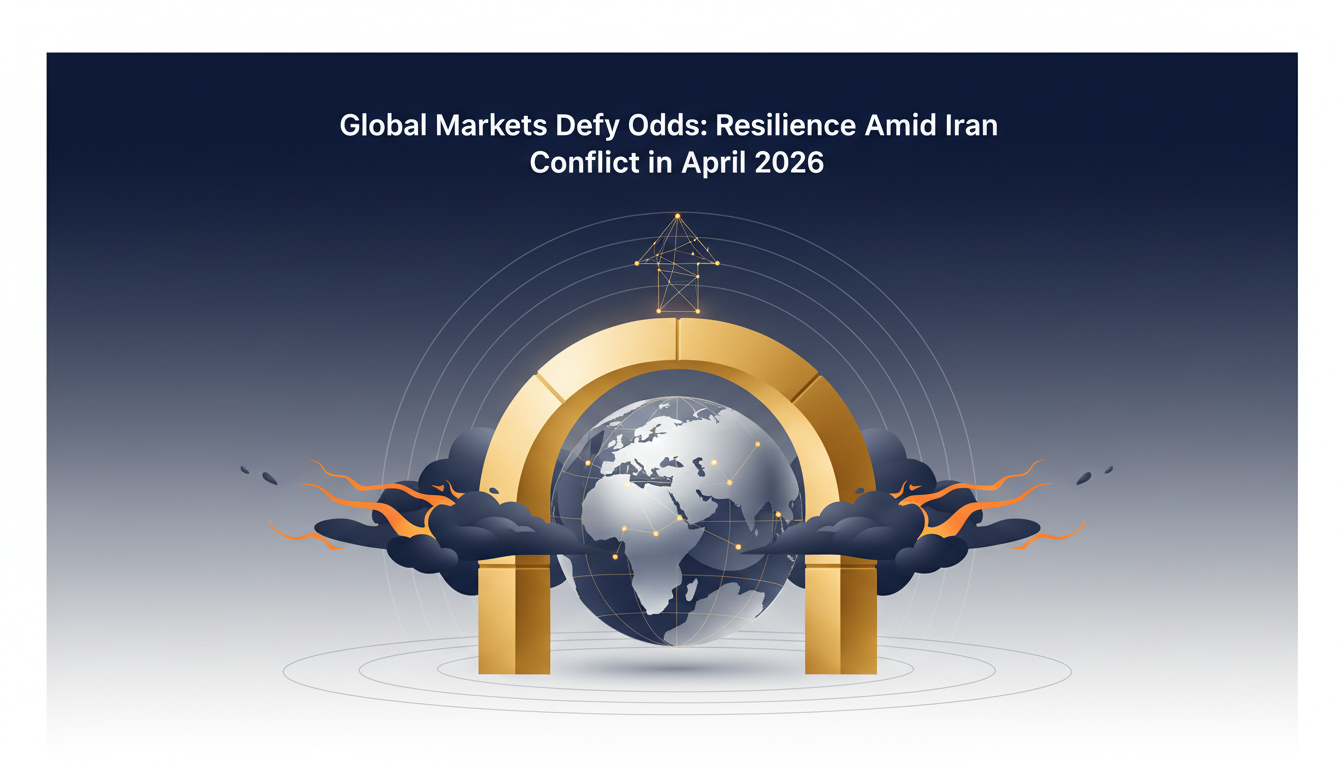
Global Markets Defy Odds: Resilience Amid Iran Conflict in April 2026
Global stock markets are rallying toward all-time highs in April 2026, despite the ongoing Iran conflict disrupting energy and trade. Emerging sectors like
Summary
- Global stock markets are rallying toward all-time highs in April 2026, despite the ongoing Iran conflict disrupting energy and trade.
- Emerging sectors like AI are driving investor optimism and infrastructure spending, acting as a buffer against geopolitical risks.
- Warnings of overvaluation and long-term instability suggest the current market resilience may face challenges ahead.
In a striking display of defiance, global stock markets are charging toward record highs in April 2026. The Iran conflict, now in its second month, keeps rattling energy markets and ratcheting up geopolitical tensions. Yet this unexpected rally, which analysts see from the US to Taiwan and South Korea, shows a financial world that seems oddly detached from the Middle East's chaos.
That disconnect has analysts and investors scratching their heads about how markets are staying strong under the pressure. The answer comes down to investor optimism, solid growth in certain sectors, and a hunch that the worst of the geopolitical fallout won't hit too hard. We'll explore the reasons for this resilience, the way AI acts as a stabilizing force, and the arguments that this rally might rest on shaky ground, all while weighing what it means going forward.
Market Rally Amidst Geopolitical Storm
Nearly two months into the Iran conflict as of April 2026, global stock markets have staged a remarkable rally that brushes aside the geopolitical tensions. According to Bloomberg, equities across major economies, including the US, Taiwan, and South Korea, are approaching all-time highs. This trend isn't just a fluke, it's a sign that investors are tuning out the war and focusing on other growth drivers.
What's behind this defiance? Investors have priced in the immediate risks of the Iran conflict. The war has disrupted oil supply chains and threatened to shut down key passages like the Strait of Hormuz, but people still believe the global economy can handle these shocks for now.
The IMF Blog shows that the war affects energy prices, supply chains, and financial markets in different ways around the world. While some places struggle with higher oil prices, others stay protected thanks to diverse energy sources or strong local demand. That's left global markets as a whole without the widespread downturn you'd expect.
"The market was largely unfazed by recent headlines about Iran closing the Strait of Hormuz again. Investors keep shrugging off the tension for key reasons."
, Jim Cramer (CNBC)
The AI Investment Shield
AI has emerged as a key reason markets are holding up in April 2026. According to Morgan Stanley, it's not just hype anymore, it's a major factor that drives huge infrastructure spending and shapes market trends.
Companies pouring money into AI tech are raking in big gains, which pulls in investor cash even as energy sectors take hits from the Iran conflict. That shift creates a shield where tech growth counters geopolitical risks.
Here's a quick look at how AI is impacting markets:
- Infrastructure Boom: Billions are flowing into AI-related infrastructure, boosting tech and construction sectors.
- Investor Sentiment: AI stocks are seen as safe havens compared to energy-dependent industries.
- Global Reach: From the US to Asia, AI adoption is driving cross-border investment, stabilizing indices worldwide.
This trend shows that up-and-coming sectors can balance out traditional risks. And honestly, if you've followed this beat, it's no shock that AI is playing such a big role right now.
Warnings of Overvaluation: A Reality Check
Sarah Breeden, deputy governor for financial stability at the Bank of England, issued a stark warning in April 2026 that global stock markets are overvalued and ripe for a big correction. She told the BBC, as CNBC reported, that inflated valuations could collapse if geopolitical tensions worsen or economic basics falter.
The worry is simple: markets might soar on AI and other growth stories, but they're still exposed to sudden changes. Overvaluation risks, plus recession fears in the US for 2026 from Crypto Briefing, hint that this resilience could crack.
The Iran conflict's unpredictability adds fuel to the fire. By contrast, the current rally looks like a bubble that might pop with outside pressure.
"Global stock markets are too inflated and will fall. Overvaluations are a real concern amidst these tensions."
, Sarah Breeden, Deputy Governor for Financial Stability, Bank of England (CNBC)
Synthesis: Balancing Optimism with Caution
The data paints a picture of markets pulled between strong resilience from AI and sector growth, and threats from overvaluation and geopolitical instability. On one side, the rally toward all-time highs, as Bloomberg reports, shows real faith in the global economy's ability to handle the Iran conflict.
On the other, alerts from people like Sarah Breeden and worries about future stability suggest this upward push isn't a sure bet. The IMF's analysis highlights the war's uneven effects, with some areas and industries more at risk than others.
Investors need to mix their excitement with caution. After all, today's wins could turn into tomorrow's losses if things shift.
Looking ahead, the resilience in April 2026 offers a compelling look at how economies adapt to crises. Equities have stayed solid, thanks to innovation and smart bets on AI, even as the Iran conflict tests the system. Which, if you're paying attention, makes you wonder how long this can last.
The warnings about overvaluation and recession risks are worth heeding. They remind us to keep an eye out for trouble that might upend everything.
So, where does that leave us? One lingering question is whether AI and other new sectors can keep the rally going if geopolitical issues flare up or a downturn hits. As 2026 unfolds, the balance of these forces will probably reshape finance in unexpected ways. What do you think, will optimism keep defying the odds, or are we headed for a correction?