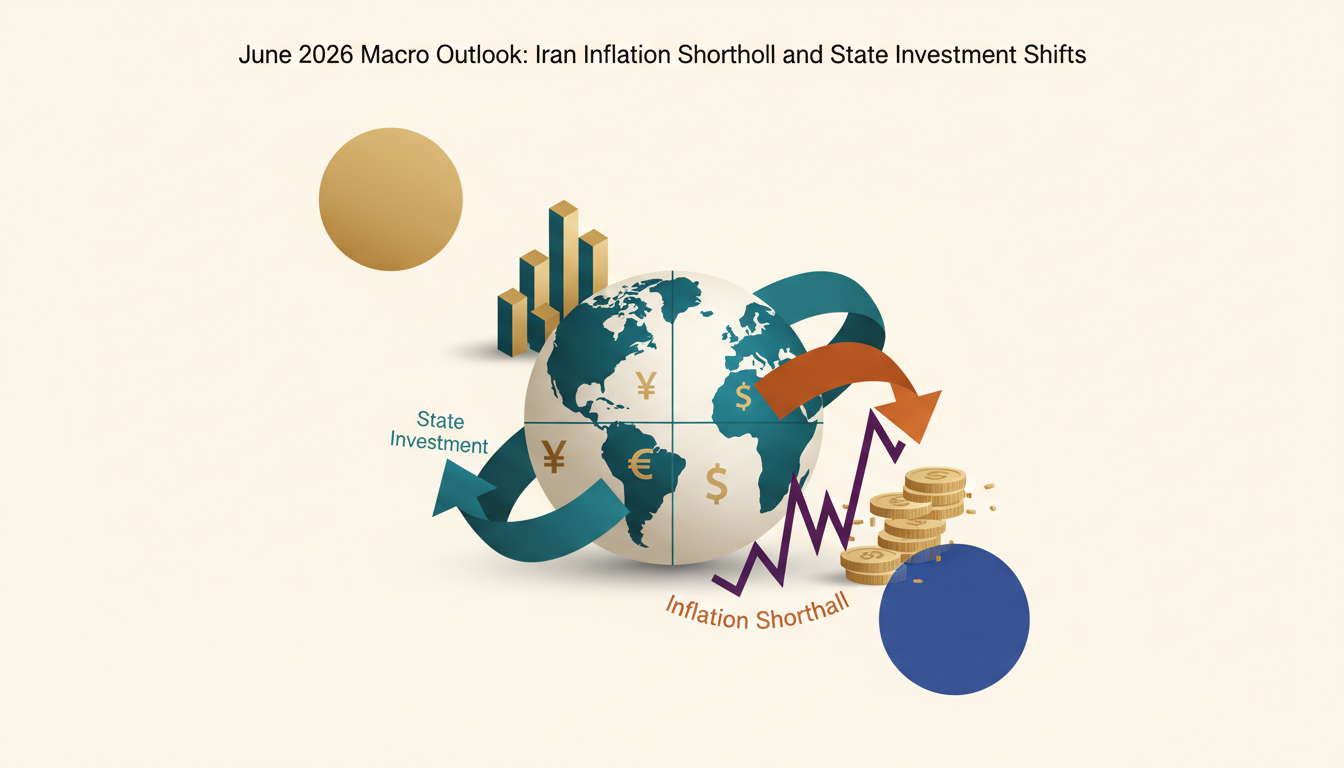
June 2026 Macro Outlook: Iran Inflation Shortfall and State Investment Shifts
Oil-driven inflation from the 2026 Iran conflict runs milder than the 2022 post-Ukraine peaks. JP Morgan assigns a 40 percent recession probability by
Summary
- Oil-driven inflation from the 2026 Iran conflict runs milder than the 2022 post-Ukraine peaks.
- JP Morgan assigns a 40 percent recession probability by end-2025, while major banks project steady global GDP expansion.
- Governments are shifting toward domestic state-subsidized industries as geopolitical rivalries intensify.
June 2026 data showed oil prices down roughly 20 percent in May. They still sat 30 percent above pre-conflict levels though. That spread highlights the core tension right now: the Iran war inflation impulse never matched the 2022 surge.
The thesis follows directly. The inflationary shock from the 2026 Iran war should fall short of 2022 levels while governments pivot toward domestic state-subsidized industries amid geopolitical rivalries. Fresh figures from the conflict zone confirm this milder trajectory. Policy responses are already adjusting.
Recession Probability Landscape
JP Morgan Research places the chance of a US or global recession by the end of 2025 at 40 percent. This single figure anchors near-term risk assessments. It reflects lingering effects from energy supply concerns tied to the Iran conflict without assuming an outright collapse in demand.
Other forecasters see firmer footing. Morgan Stanley projects global real GDP growth of 3.2 percent in 2026 and 3.4 percent in 2027. The Conference Board holds a 2.7 percent year-over-year forecast for 2026. These baselines sit only modestly below 2025 estimates.
The Iran war inflation has not yet derailed expansion. Recession odds remain material but contained. The probability reading from JP Morgan sits alongside higher growth projections from peer institutions. That mix produces a signal that feels cautious yet not dire for the macro outlook 2026.
Iran War Inflation Impact and State Investment Shift
Price dynamics point to a contained shock. Oil prices have eased from immediate post-conflict spikes. Broader inflation readings also show less momentum than after the 2022 Ukraine invasion. The shortfall stems from smaller initial supply disruptions and faster inventory drawdowns compared with the earlier episode.
Governments have begun redirecting capital toward home-market priorities. Geopolitical rivalries encourage subsidies for domestic energy, manufacturing, and technology sectors. This reallocation appears in budget proposals and state investment vehicles across multiple regions. The move reduces reliance on contested global supply chains while supporting local employment and capacity.
"Inflationary shock projected to fall short of 2022 levels."
, J.P. Morgan Research (Source)
The policy shift also carries portfolio consequences. Investors face incentives to favor assets tied to state-supported industries over pure global exporters. This reorientation shows up clearly in capital-flow data and procurement announcements released through May 2026. And honestly, that's a big deal if you're positioning for the next couple of years.
Social Highlight · @msresearch · Published 2026-06-08
June 2026 macro data shows milder Iran inflation. (link)
Counterpoint: Fluctuating Risks
Recession probabilities have moved with news on potential conflict resolution. J.P. Morgan's Mid-Year Outlook 2026 notes that even partial de-escalation can alter energy-infrastructure damage assessments and ease near-term inflation pressure. This variability means headline probabilities remain sensitive to diplomatic developments rather than fixed by structural forces alone.
By contrast, the underlying GDP forecasts from Morgan Stanley and The Conference Board have shown greater stability. The divergence highlights that while short-term recession gauges can swing, medium-term growth expectations have incorporated the Iran war inflation without major downward revisions.
Synthesis
The weight of the evidence supports a scenario of moderated inflation pressure alongside policy-driven investment reallocation. Recession odds at 40 percent warrant monitoring. Yet the consensus growth projections indicate resilience. State subsidies for domestic sectors are likely to accelerate regardless of exact conflict outcomes.
This means portfolio construction should account for both the lower inflation baseline and the rising role of government capital. The macro outlook 2026 therefore centers on tracking these two variables in tandem.
What remains open is how quickly private-sector capex responds once state investment programs scale. The answer will shape both inflation persistence and equity-sector leadership through 2027. Which, if you've been watching this space, shouldn't be surprising.