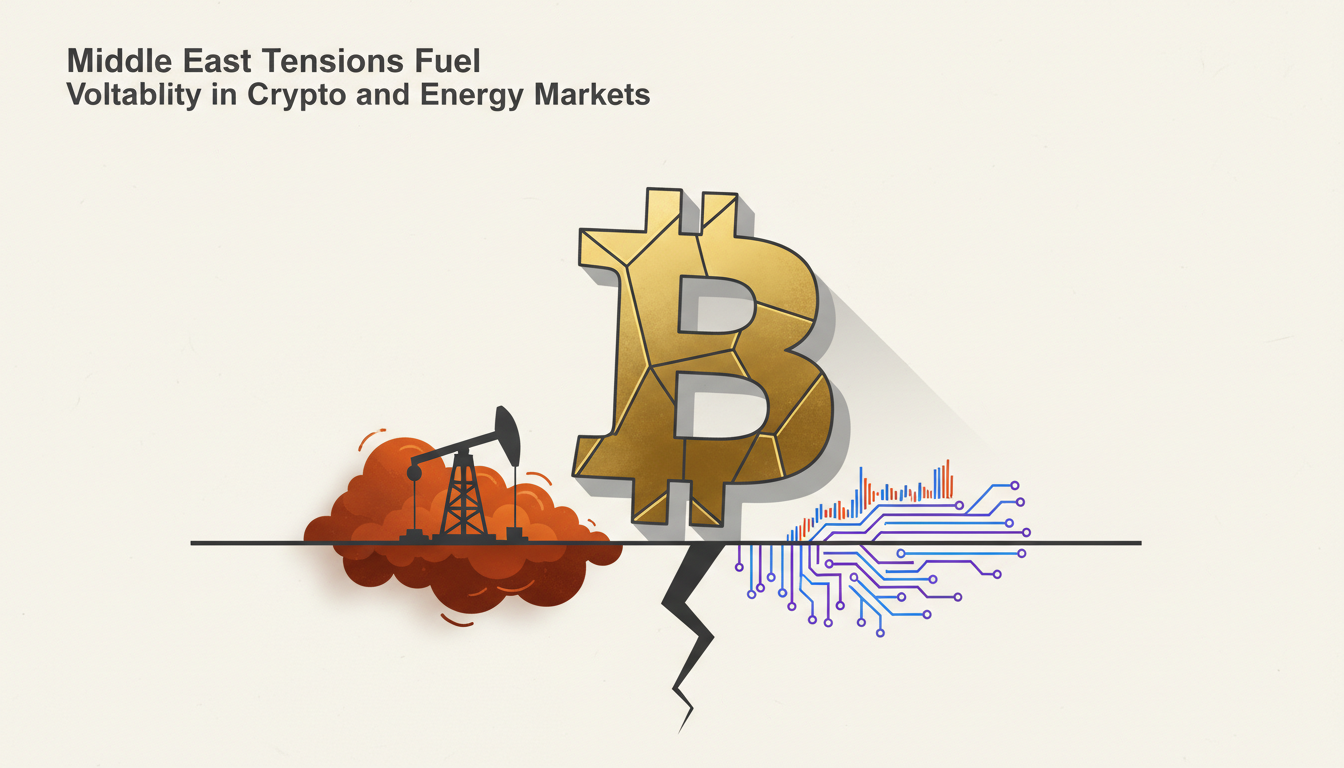
Middle East Tensions Fuel Volatility in Crypto and Energy Markets
Geopolitical tensions in the Middle East, especially the 2026 Iran war and Strait of Hormuz disruptions, are driving significant volatility in crypto and
Summary
- Geopolitical tensions in the Middle East, especially the 2026 Iran war and Strait of Hormuz disruptions, are driving significant volatility in crypto and energy markets.
- Bitcoin slid toward $80,000 and Ethereum dropped 2% to $2,290 as oil prices surged 10-13% to $80-82 per barrel in May 2026.
- Investors should monitor ongoing conflicts and policy decisions for potential further impacts on asset prices.
In early May 2026, escalating tensions in the Middle East focused on the ongoing Iran war and disruptions in the Strait of Hormuz shook global financial markets.
Bitcoin prices slid toward $80,000, while Ethereum fell 2% to $2,290, showing a broader retreat in crypto assets that various reports noted.
Oil prices skyrocketed 10-13% to $80-82 per barrel, and Brent crude may average $86 per barrel for the year.
The Strait of Hormuz serves as a key chokepoint for global oil supply.
It has turned into a flashpoint amid the Iran conflict, which directly hits energy costs and boosts the U.S. dollar.
This puts pressure on risk assets like cryptocurrencies as investors seek safer options during uncertain times.
"Bitcoin slides toward $80,000 as geopolitical tensions weigh on sentiment after Trump rejected Iran's latest proposal to end the war."
, FXStreet
Context: Why Middle East Tensions Are Rattling Markets
The Middle East has always been a geopolitical hotspot, but the 2026 Iran war has ramped up worries about energy security and global trade.
Details from sources like Wikipedia show how the Strait of Hormuz, a major route for the world's oil, faces disruptions that threaten supply chains.
This conflict and failed diplomacy, including Iran's rejected peace proposal in May 2026, have fueled market fears.
Cryptocurrencies often seem unrelated to traditional markets, yet they feel the heat from macroeconomic pressures.
A stronger dollar and higher oil prices from these tensions have pushed investor sentiment away from speculative assets like Bitcoin and Ethereum.
Details: Breaking Down the Market Impact
In the crypto world, Bitcoin dipped 1% from $80,984.66 at midnight UTC to $80,800 on May 12, 2026.
Ethereum dropped 2% to $2,290, data from Binance shows.
Analysts highlight heightened geopolitical risks as the main cause, along with a stronger U.S. dollar during the crisis.
Brent crude oil prices jumped 10-13% to $80-82 per barrel by early March 2026.
Forecasts suggest an average of $86 per barrel for the year, then possibly down to $70 later, according to the World Bank Blogs.
The Strait of Hormuz disruptions play a big role in this surge, given its importance in global oil transit.
Some parts of this situation are still changing.
Investors need to watch for updates from reliable sources.
Reaction: How Markets Are Responding
The S&P 500 fell 0.41% to 7,200.75 points, which shows broader unease about the Middle East, as Reuters reported.
Traders in the crypto community are reassessing risks with rising oil prices and a stronger dollar.
The overall mood is one of caution as people wait to see how long and severe the conflict might get.
Investors should keep an eye on the Iran war and any fixes for the Strait of Hormuz.
That could either worsen or ease the current pressures.
U.S. policy shifts, diplomatic talks, and oil trends will likely keep affecting crypto and traditional assets in the weeks ahead of 2026.