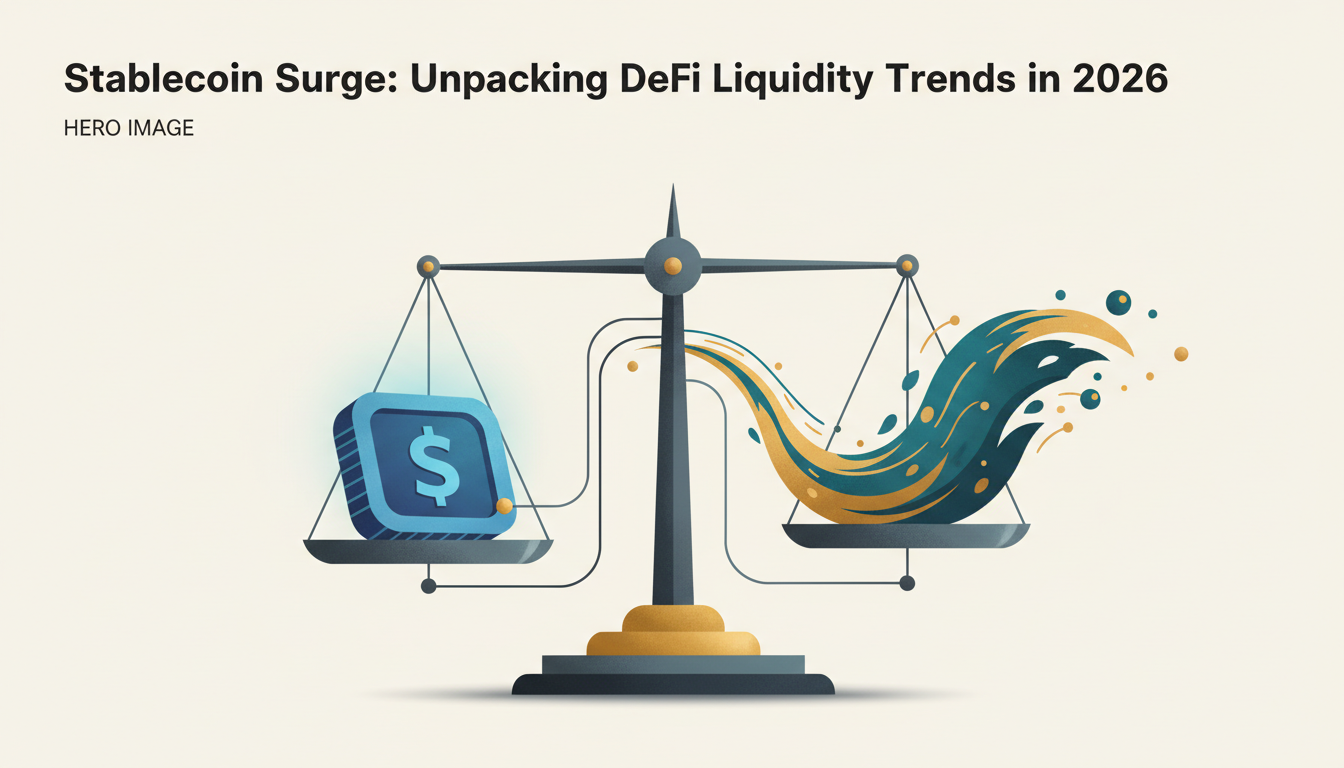
Stablecoin Surge: Unpacking DeFi Liquidity Trends in 2026
Stablecoin liquidity, including a 250 million USDC injection, is driving massive growth in DeFi protocols like Curve and Uniswap in early 2026.
Summary
- Stablecoin liquidity, including a 250 million USDC injection, is driving massive growth in DeFi protocols like Curve and Uniswap in early 2026.
- Tether (USDT) imbalances, with Curve holding 60% USDT in its pools, are raising concerns over systemic risks and potential vulnerabilities.
- DeFi hacks have already caused over $750 million in losses this year, exposing critical security flaws amid rising adoption.
A huge 250 million USDC injection has flooded the DeFi market in early 2026 and sparked a major liquidity surge in protocols like Curve and Uniswap.
Reports from MEXC and CryptoRank show this influx is changing borrowing and lending dynamics, perhaps by lowering rates and boosting activity.
The DeFi ecosystem is also dealing with tough challenges, like Tether imbalances and security exploits that cost over $750 million.
This highlights a key moment for decentralized finance.
With Curve's 3pool holding 60% USDT and Uniswap V3 pools facing heavy selling, experts from Blockworks and Kaiko Research warn that growth and risk are out of balance.
Analysts question if the sector can handle these pressures.
"A 250 million USDC injection can significantly lower borrowing rates and boost lending, but it also amplifies the stakes for DeFi security."
, Market Analysis (MEXC)
Context: The Stablecoin Boom in DeFi
Stablecoins are the backbone of decentralized finance and offer the stability people need for lending, borrowing, and trading in a wild crypto world.
By early 2026, their influence has grown even more, as protocols depend on assets like USDC and USDT to keep liquidity pools running and boost total value locked.
This 250 million USDC minting shows the rising demand for dollar-pegged assets in DeFi.
Yet the surge brings worries, too.
Heavy use of stablecoins, especially Tether, has created imbalances in vital pools and shaken trust with security breaches.
Can DeFi keep growing without fixing these risks?
Details: Liquidity Surges and Tether Imbalances
The 250 million USDC injection will shake up DeFi protocols and affect borrowing costs and lending chances.
MEXC and CryptoRank note that this liquidity may make capital easier to access and spur activity on various platforms, though the gains aren't equal for everyone.
Tether trends are troubling on Curve and Uniswap, where Curve's 3pool has 60% USDT and creates imbalance, as Kaiko Research points out.
Uniswap V3 pools have seen about $40 million in USDT sales, plus $35 million on Curve, according to Blockworks.
These moves raise red flags about the stability of liquidity pools and their impact on DeFi as a whole.
DeFi hacks in 2026 have led to over $750 million in losses and exposed weak spots at key failure points, per Binance.
Reaction: Growing Concerns in the DeFi Community
The DeFi community is watching these changes with caution.
They're excited about the liquidity boost and its growth potential, but Tether imbalances and the huge hack losses have set off alarms.
Curve's founder has questioned the sector's reliability amid the $750 million in losses this year, as Binance reports.
Analysts see the USDT buildup in Curve's pools as a threat that could trigger wider problems.
They call for better diversification and stronger security measures to ease this tension.
The balance between opportunity and risk will define DeFi's path forward.