Strait of Hormuz Reopening: What It Means for Oil Prices and Market Volatility
The Strait of Hormuz, blocked by Iran since February 28, 2026, remains a critical flashpoint for global oil trade, driving extreme price volatility.
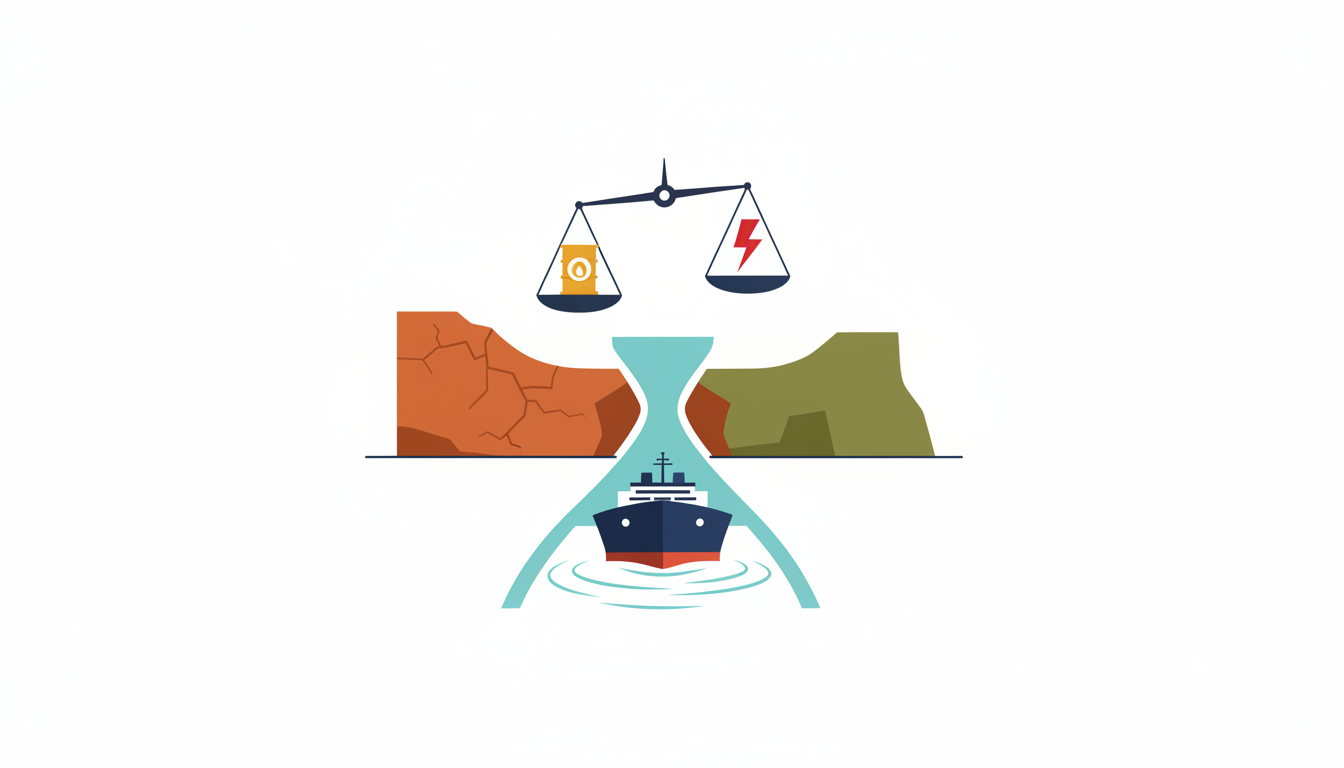
Summary
- The Strait of Hormuz, blocked by Iran since February 28, 2026, remains a critical flashpoint for global oil trade, driving extreme price volatility.
- US-Iran negotiations, despite a ceasefire since April 8, 2026, are stalled, with President Trump rejecting recent peace proposals.
- Crude oil prices, still 59.66% higher than last year, reflect ongoing uncertainty, impacting financial markets worldwide.
In May 2026, the Strait of Hormuz crisis is shaking global energy markets.
Iran blocked shipping traffic on February 28, 2026, according to Wikipedia.
This vital choke point, which carries about a fifth of the world's oil, has become a geopolitical battleground amid US-Iran tensions.
The blockade is causing wild swings in crude oil prices.
Investors are already on edge, so this adds to the market volatility.
The Strait's closure has cut energy supplies and pushed crude oil prices up 59.66% from a year ago, even with a small 0.17% dip lately, based on data from Trading Economics.
No final peace deal is in sight despite the April 8 ceasefire, as Al Jazeera reports.
That uncertainty is rippling through financial markets and hitting energy stocks and inflation forecasts.
Context: Why the Strait of Hormuz Crisis Dominates Markets
The Strait of Hormuz, a narrow waterway between Iran and Oman, is key to global energy trade.
Iran shut it down in late February 2026, which disrupted oil from major producers like Saudi Arabia and Iraq to international markets.
This is a global issue because the strait handles a big share of the world's crude oil shipments.
Tensions between the US and Iran built up earlier this year, leading to Iran's decision to block the strait as a strategic move.
A ceasefire has held since early April, as Al Jazeera notes, but no broader agreement is in place.
Both sides are sticking to their demands, so the situation stays risky.
Details: Unpacking the Crisis and Market Impact
Iran has the power to threaten tankers and stop all shipping through the Strait of Hormuz, as The Guardian points out.
That has markets on edge, with crude oil prices swinging due to the disruptions and tight inventories, according to OilPrice.com.
The price jump of nearly 60% year-over-year shows how severe the supply problems are.
Talks between the US and Iran are tense.
Iran wants the US to end its blockade of Iranian ports in exchange for reopening the strait, as CNBC reports.
President Trump rejected recent proposals and said, "I don’t like it," based on YouTube coverage.
This deadlock, even with the April ceasefire, means a resolution could take time.
"Iran retains the ability to threaten and inflict damage on tankers passing through the Strait of Hormuz and effectively halt all other shipping."
, The Guardian (Source)
Reaction: How Markets Are Responding
Financial markets are reacting with anxiety to the Strait of Hormuz crisis.
Energy stocks and commodities are seesawing as investors deal with supply fears and hopes for diplomacy.
The volatility in crude oil prices, as tracked by OilPrice.com, is raising inflation concerns and forcing central banks to rethink policies.
The uncertainty is spreading to other sectors.
Shipping and logistics equities are under pressure, and safe-haven assets like gold are seeing occasional rises as investors hedge risks.
Though some reports are still coming in, everyone agrees that markets will stay jittery until the strait reopens.
The focus is on US-Iran talks and any progress toward reopening the Strait of Hormuz.
A breakthrough might ease oil price pressures fast.
Continued stalemate, especially with President Trump's rejection of recent terms as of May 2026, means volatility will persist.