XRP Ledger's Roadmap to Quantum Security and Layer 2 Scaling by 2028
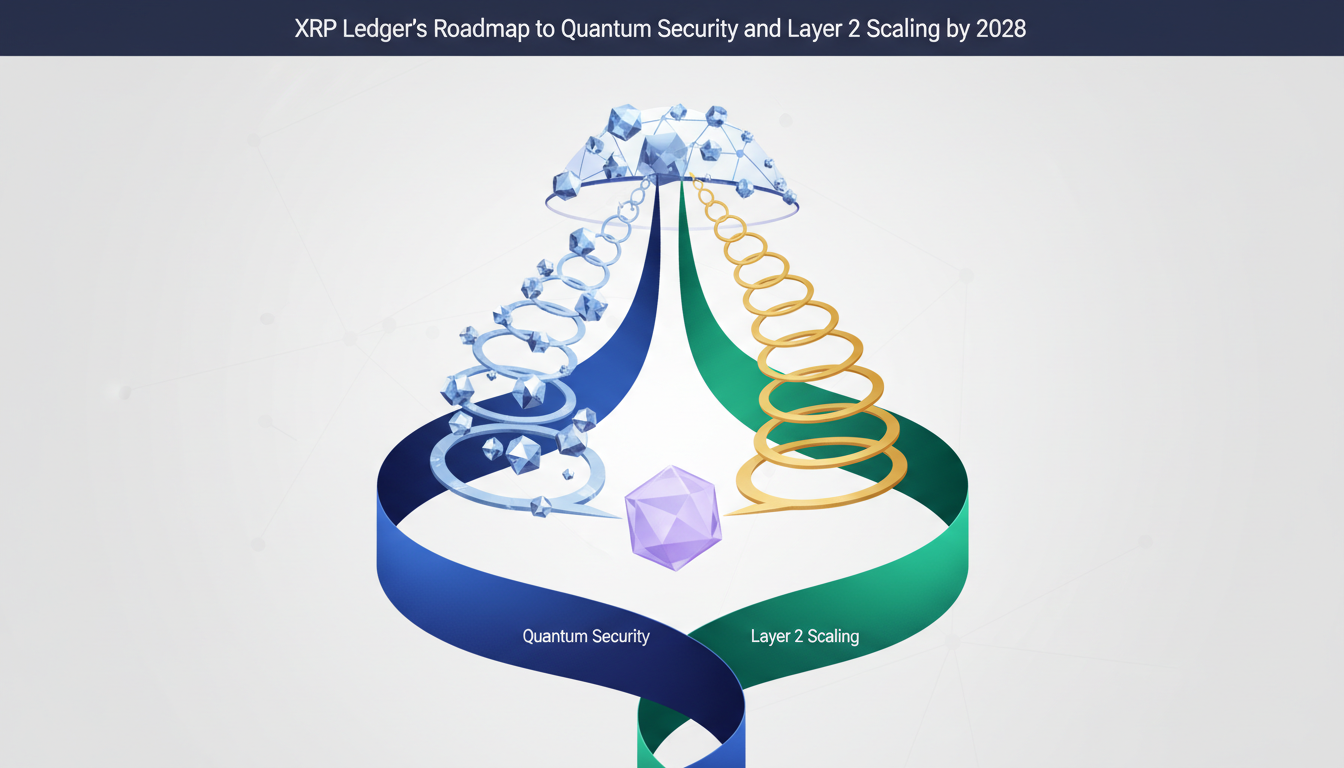
Ripple has unveiled a four-phase roadmap to make the XRP Ledger quantum-resistant by 2028, with testing already underway. The plan includes full
Summary
- Ripple has unveiled a four-phase roadmap to make the XRP Ledger quantum-resistant by 2028, with testing already underway.
- The plan includes full post-quantum cryptography implementation and a Quantum-Day contingency for future-proofing.
- Layer 2 scaling solutions, like Arbitrum, highlight the growing need for scalability, with billions in transactions processed.
Ripple is making a bold move to secure the XRP Ledger's future. It announced a detailed four-phase roadmap on April 20, 2024, to reach quantum resistance by 2028. Reports from sources like CoinDesk and Crypto News show this targets a key weakness in today's cryptographic systems.
Quantum computing could break traditional encryption and threaten blockchain integrity.
"Ripple's roadmap to quantum resistance by 2028 is a proactive step to safeguard the XRP Ledger against future threats."
, Unchained Crypto (Unchained Crypto)
The Context Behind Quantum Threats and Scaling Needs
Quantum computing poses a big challenge to blockchain tech. It could crack common cryptographic algorithms as power grows. Ripple's 2028 plan matches the industry's rising worry about a "Q-Day" when quantum computers might shatter current encryption.
Scalability is another key issue for blockchains.
Layer 2 solutions like Arbitrum have boomed, with TVL at $16-20 billion and billions of transactions, per Token Terminal. This shows why the XRP Ledger's push for both security and scaling could raise the bar for networks.
Ripple's Four-Phase Roadmap
The plan for quantum resistance has four phases and ends in 2028. Phase 2 testing is underway now, with experiments on post-quantum cryptography as Crypto News reports. It also includes a Quantum-Day contingency for quick adaptations.
By Phase 4, Ripple will add native post-quantum cryptography through a network amendment, according to Binance Square.
This timeline bolsters security and fits with potential layer 2 integrations to handle more transactions. The XRP Ledger's setup, as Binance notes, gives it an edge for these upgrades.
This roadmap addresses a major future risk. It aligns with the success of layer 2 networks like Arbitrum. Ripple's approach might push other projects to act on quantum threats.
Industry Implications and Scalability Trends
Layer 2 solutions are changing how crypto operates, with Arbitrum leading the way through its high TVL and transaction speed. The XRP Ledger, as a layer 1 chain, could use similar off-chain methods to improve efficiency while strengthening security.
Other networks face the same challenges of quantum risks and scalability.
Ripple's Phase 2 results will draw close attention if they go public. A win could show how blockchains handle security and growth demands.
The coming years are vital for Ripple and the XRP Ledger. Testing outcomes will reveal if full quantum resistance is possible by 2028. Any layer 2 deals could make the ledger stand out in a crowded field. Watch for Ripple's updates and reactions as this unfolds.